

How to Save for a House Without Stretching Your Monthly Budget
Saving for a house starts with more than setting aside money for a down payment. Whether you're buying your first home or planning your next move, a realistic homebuying budget accounts for closing costs, moving expenses and the savings you'll want available after you get the keys. Learning how to save for a house means setting a clear goal, finding practical ways to reduce everyday expenses and building a monthly savings plan that fits your timeline without putting other financial priorities on hold.
Key Takeaways:
- Your home savings goal should cover the down payment and closing costs.
- Budget for moving expenses and keep an emergency cushion after closing.
- Divide your savings gap by the months until purchase for a monthly target.
- Automating transfers and trimming recurring bills can accelerate savings.
How Much Money Should You Save for a Down Payment?
There is no single answer for every buyer when saving for a down payment. While putting 20% down can help reduce borrowing costs and avoid private mortgage insurance on most conventional loans, some qualified buyers can purchase a home with substantially less. The amount you need depends on your loan program, lender requirements and home price. Before setting your savings goal, explore your financing options and consider how different down payment amounts could affect your monthly budget.
According to the National Association of REALTORS®' 2025 Profile of Home Buyers and Sellers, first-time homebuyers made a median down payment of 10% of the purchase price. While this figure provides a helpful reference point, it's not a minimum requirement. The amount you'll need to save depends on your financing options, budget and the home you plan to purchase.
What Costs Should Your Home Savings Budget Cover?
While there are several expenses buyers must consider when purchasing a new home, new homeowners can also take advantage of tax deductions and credits. These include mortgage interest credit, property tax deductions and much more. All in all, it truly is a numbers game. Because tax savings are not guaranteed and generally come after purchasing a home, they should not replace a dedicated savings plan for your down payment, closing costs and other upfront expenses.
Before deciding how much to save each month, consider the expenses you'll need to cover throughout the homebuying process. Building these costs into your budget early can help you feel more prepared when you're ready to purchase.
- Down payment: Set a target based on your expected home price and loan options.
- Closing costs: Account for lender fees, title services and other settlement expenses.
- Moving expenses: Plan for moving services, utility setup and essential household purchases.
- Emergency savings: Maintain a financial cushion for unexpected expenses after moving into your home.
According to the Consumer Financial Protection Bureau, closing costs typically range from 2% to 5% of a home's purchase price, separate from the down payment. For a $400,000 home, that could mean budgeting approximately $8,000 to $20,000 for closing expenses alone. Including these costs in your savings goal can help you prepare for the full amount needed to purchase your home.
For a more detailed breakdown of lender fees, title services and prepaid expenses, explore our guide to understanding homebuyer closing costs.
How to Create a Monthly Home Savings Plan
A large savings goal becomes more manageable when you break it into smaller monthly amounts. Start with the funds you'll need and work backward from your ideal purchase date.
- Choose your timeline: Decide approximately when you'd like to purchase your home.
- Calculate your savings target: Combine your expected down payment, closing costs and other purchase expenses.
- Subtract existing savings: Identify money already dedicated to your home purchase without using your emergency reserves.
- Set monthly deposits: Divide the remaining amount by the months until purchase and schedule regular savings transfers.
Example: If your savings target is $30,000, you already have $6,000 set aside, and you plan to buy in 24 months, you'd need to save approximately $1,000 per month.
If your down payment represents the largest portion of your savings goal, these steps for saving for a down payment can help you organize your approach.
Practical Ways to Save Money for a House
Saving for a home does not have to break the bank, though. Explore the major costs you should expect to cover during the process along with some simple tips for starting your savings plan to help you get the keys to your dream home faster.
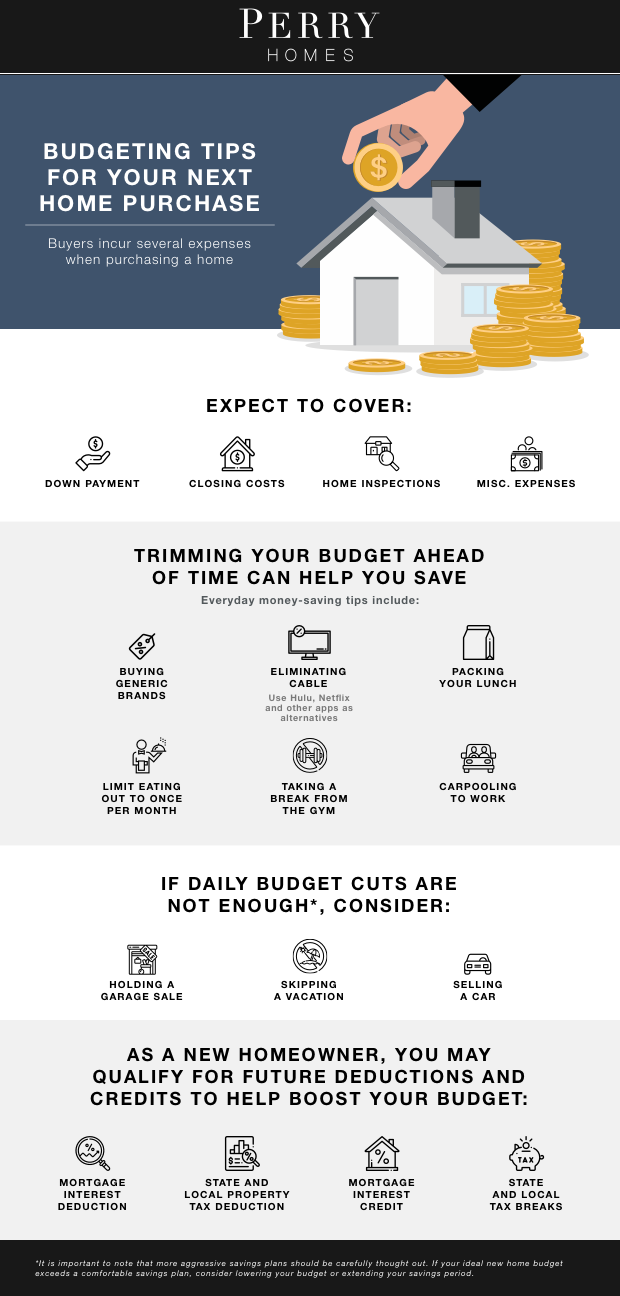
Small, consistent changes can help create more room in your budget without disrupting your daily routine.
- Review recurring expenses: Identify subscriptions, memberships or services you no longer use regularly.
- Adjust everyday spending: Look for manageable ways to reduce dining, entertainment and convenience expenses.
- Put extra income to work: Consider directing bonuses, raises or other unexpected income toward your home savings goal.
- Review your progress monthly: Check your savings balance and adjust your plan when expenses or income change.
Looking for additional ideas? Explore more practical ways to save money for a home as you work toward your savings goal.
Take the Next Step Toward Homeownership
Understanding how to save for a house is the first step toward moving into your dream home. Now it is time to discover what your price point can get you! Explore and compare available Perry Homes’ properties in some of Texas’ most desirable communities to find the perfect home for your unique lifestyle.